

Christmas is just weeks away which means holiday shopping is in full swing. As far as the most spectacular window displays in Paris go, some like Galeries Lafayette, others prefer Le Bon Marché. I, however, am personally on team La Poularde Saint-Honoré… That’s a butcher shop by the way.
Why? Because poultry farmers all over France have spent the past several months laboring to raise their plumpest poulets, and they are finally ready for holiday tables. How exciting!
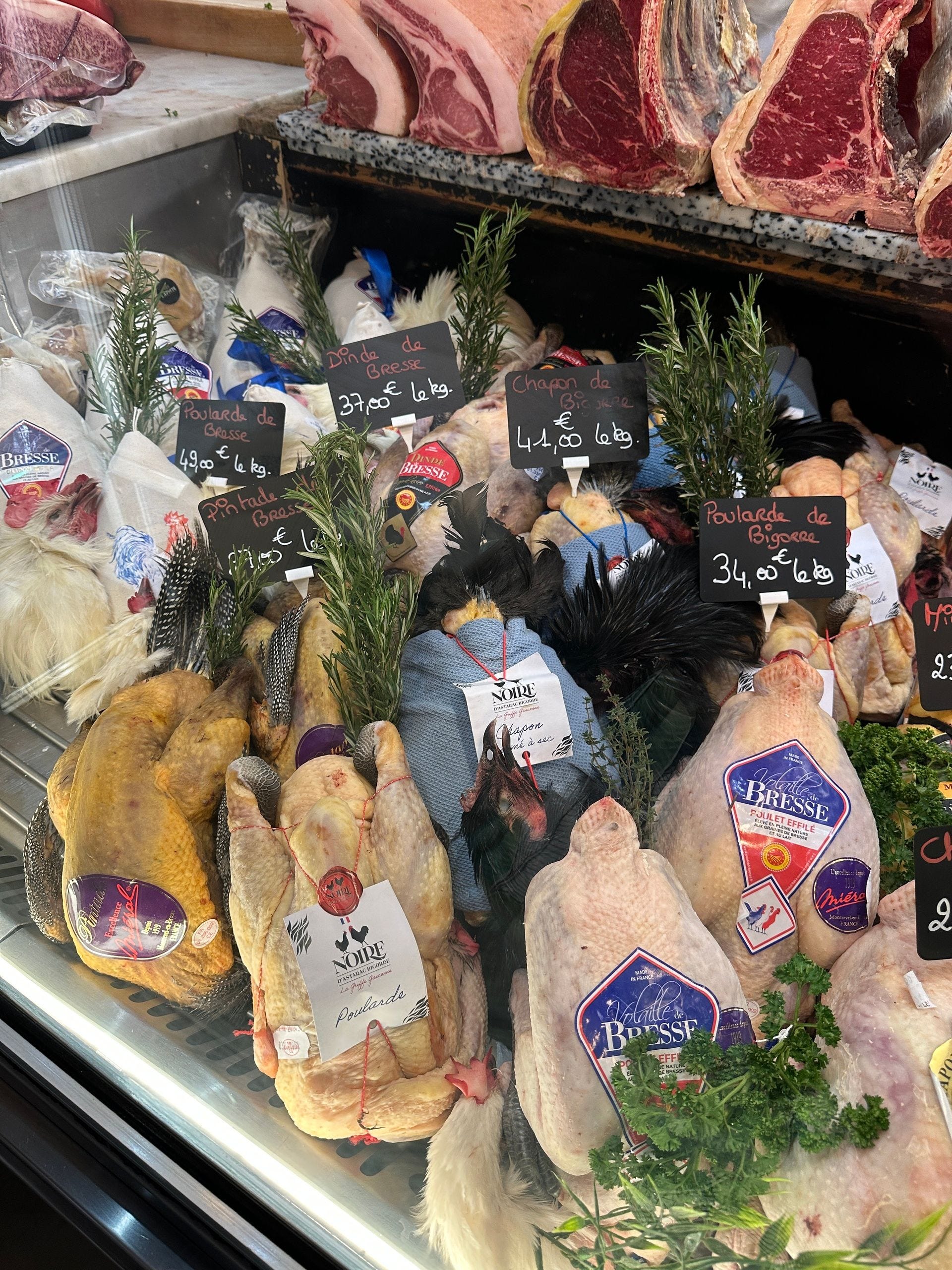
For French families, selecting a holiday bird is a far more serious task than it is for us back in the States. For us, chicken is chicken, turkey is turkey, and that’s about as far as it goes.
In France, however, the distinctions are almost endless. From feed, to breed, to gender, and more, the nuances of French poultry run deep. It can be rather overwhelming if you’re not familiar with all the options, but fear not. This week’s newsletter—a beginner’s guide to French poultry—will help you decipher the offerings at bistrots and butchers this holiday season.
Poulet, poulet blanc, poulet jaune — What the hell is the difference?
To get started, let’s get some basic terms straight.
Volaille translates to “poultry.”
Poulet translates to “chicken.” This is a gender neutral term for animals raised to be eaten (before sexual maturity). High quality poulets are typically raised for 80 to 120 days
Poulet jaune ou blanc?
Poulet jaune translates to “yellow chicken.” These birds get their yellow tinge from the carotin in their rich, corn based diet, which also makes them fattier and, in my opinion, tastier than a typical chicken.
Poulet blanc translates to “white chicken”. These birds eat a traditional of feed grains, soy, insects, etc.
A coquelet is a small chicken raised for roughly 40 days. The word coquelet technically specifies that the bird is male, but the term is mostly used to emphasize its small size. It would be difficult to distinguish between males and females at this stage. They are often more tender and less fatty than a normal poulet and they are ideal for two people. Just don’t expect leftovers.
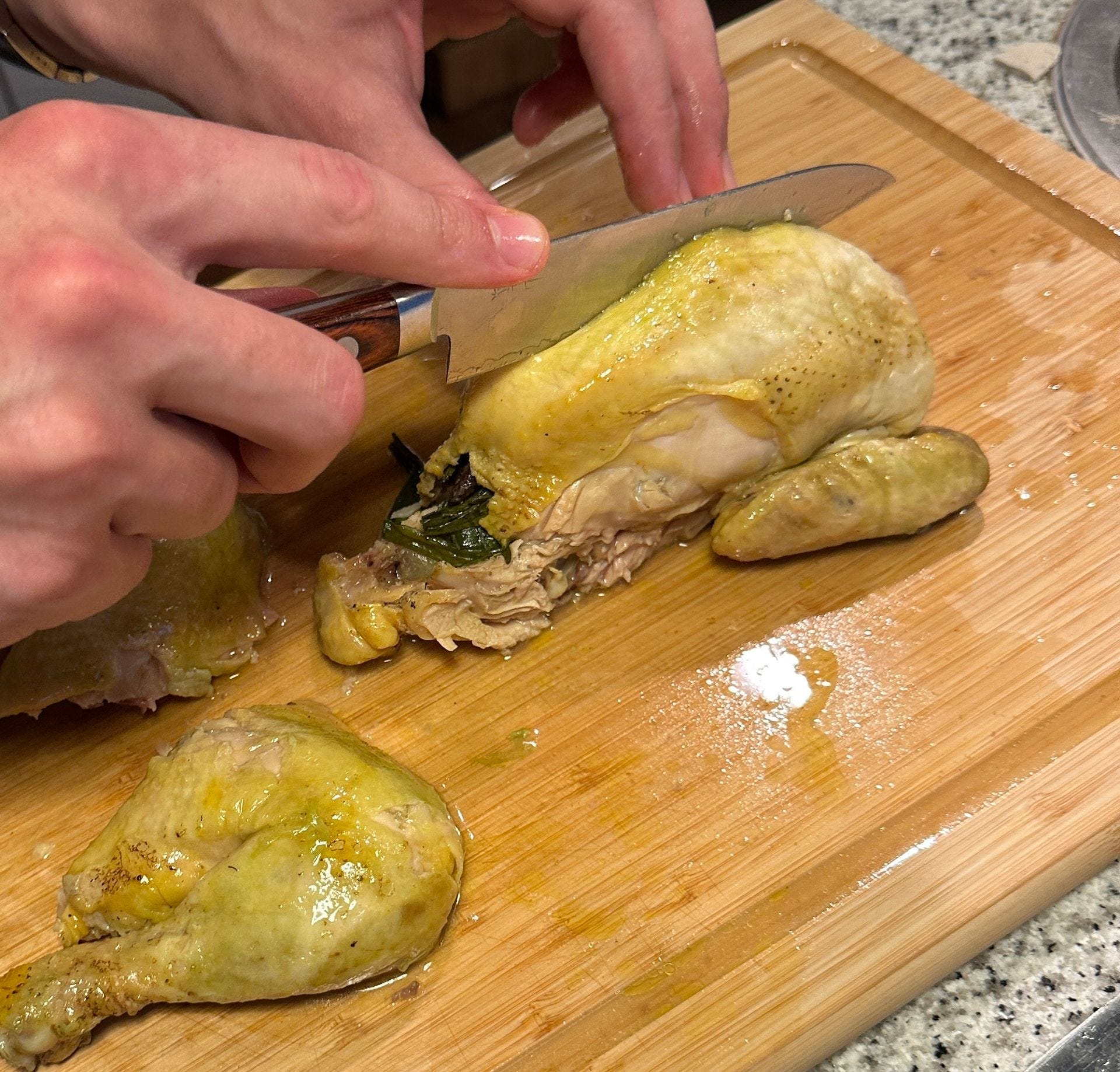
Holiday Favorites: poularde, chapon, et les volailles de Bresse.
Ohhh baby, now we’re getting to the good stuff—the top shelf chickens. These birds are for special occasions.
A poularde is female chicken, but not technically a hen as she has not yet laid eggs. They are raised a minimum of 120 days and fattened with an especially rich feed of grains and even dairy (powdered milk).
A chapon, or a “capon” in English, is a male chicken that has been castrated to stunt its sexual maturation and to speed up the fattening process. Weird, right? That’s nothing compared to what they do to snails (I’ll let you google it). The French do wacky things to their livestock in the name of deliciousness.
Les Volailles de Bresse — the iberico of chickens
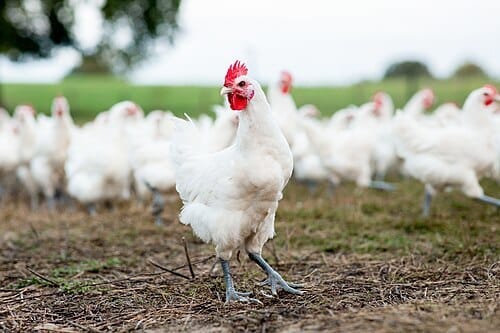
Bresse poultry (chicken and turkey)—to give you an idea of their importance—are the only birds in the world with an AOP, or a protected appellation of origin. That’s a huge deal in European agriculture.
So, what makes a volaille de Bresse so special?
Well, for starters they are raised for a minimum of 5 months. That’s almost twice as long as what is required for chickens with the label rouge distinction—another regulated marker of high quality.
During those 5 months, Bresse chickens enjoy unmatched levels of liberty for commercially raised birds. Each one is entitled to 15 square meters of outdoor space, but often they have much more. The label rouge only requires 2 square meters to be classified as free range.
That means plenty of exploration for Bresse birds, who receive a significant portion of their food (insects and plants) from nature, and who develop large legs from all the exercise. A Bresse chicken placed next to an industrial American chicken would hardly look like the same species.
The rest of their diet is a strictly controlled mixture of grains, corn, and powdered milk, to ensure the end result is deliciously plump.
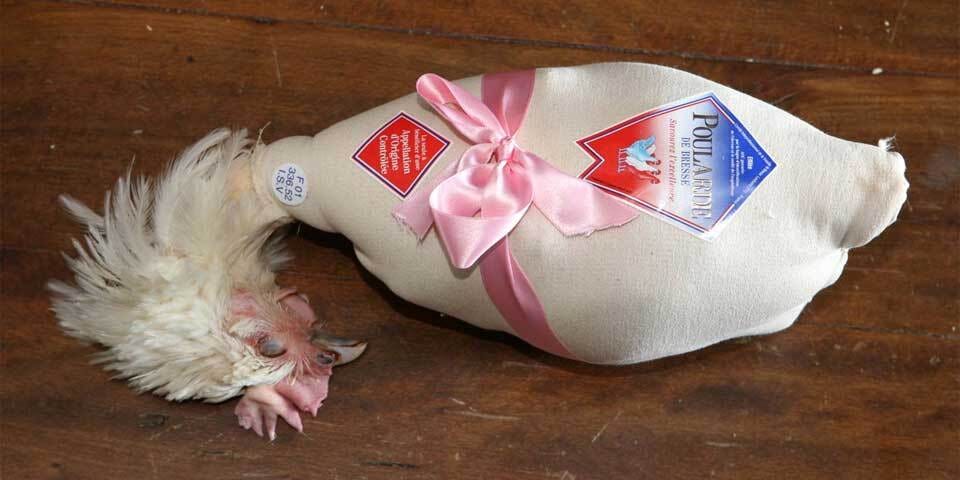
Why is it wearing a straight jacket?
Those little straight jackets sported by some poulardes and chapons, are not just a useless French peculiarity; they serve a specific purpose. The tight wrap distributes the fat evenly under the bird’s skin and gives it a compact, uniform shape.
I will refrain from covering other types of poultry today (guinea fowl, duck, goose, quail, pigeon, etc.), as we have still only begun to scratch the surface of chickens.
In any event, now that you’ve reviewed some of the fundamentals, I hope you’ll be able to better navigate December’s restaurant menus and to enjoy my favorite kind of window shopping.
Don’t hesitate to reply to this newsletter if you’d like more breakdowns of French products like this. Maybe we’ll even publish a second issue of the poultry post. Ça roule ma poule?
See you next week!
Max