

If Alfred Hitchcock were to design a brasserie, it would be Brasserie Balzar. And I don’t just mean the interior architecture—although the brass railings, art deco cabinetry, and tall mirrors would suit his aesthetic—I mean the entire scene.
The waiters, in their black bowties, step into frame right on cue, executing short lines and gestures with choreographed precision. The patrons dress with a casual sophistication taken right from the wardrobe of a mid-century thriller.
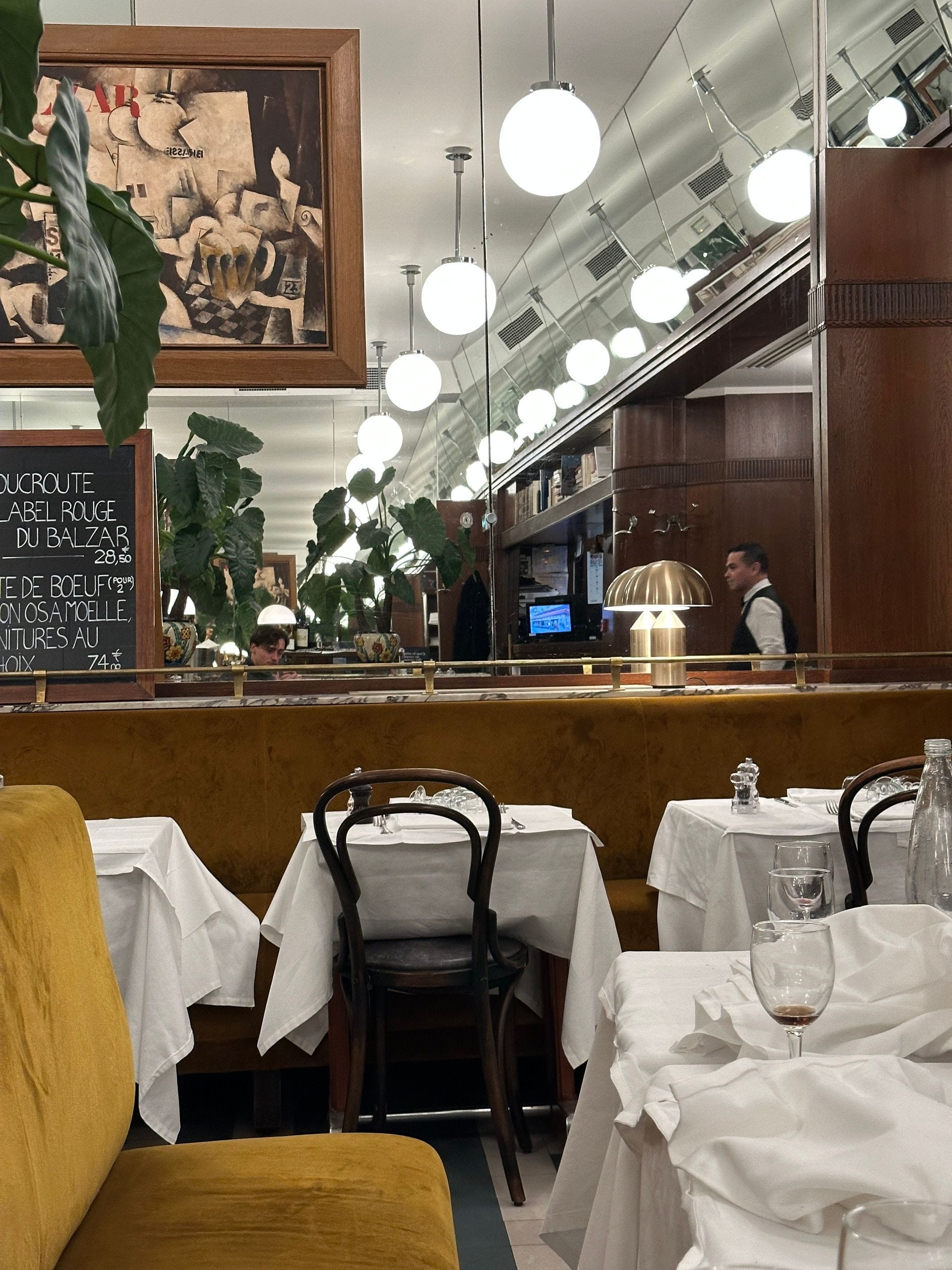
On one occasion, tucked away in a discreet corner on a velour banquette, I found myself sucked in by a curious conversation between two characters—Hitchcock’s would-be protagonists—seated side by side at the neighboring table. A scandalous dynamic unfolded.
The gentleman, dressed in tweed and sporting professorial spectacles, dictated his schedule to the lady, while she flipped through a planner, scribbling down the appointments, occasionally interjecting, “Ah non, you can’t that afternoon, you have a conflict.”
He addressed her with the informal tu, while she responded to her superior with the formal vous. They were seated awfully close to one another for colleagues, I thought. Then, she turned to him, “Monsieur, vous me manquerez tellement, monsieur (Sir, I’ll miss you so much),” prompting a passionate embrace.
The cinematic vibe at Balzar is rather apropos, considering it sits sandwiched between Sorbonne University buildings and a cluster of Paris’s most iconic movie halls: Le Champo, La Filmotèque du Quartier Latin, Reflet Medicis, and Cinéma des Écoles. Balzar has thus been a favorite of giants of La Nouvelle Vague, like Louis Malle, or Hollywooders, like Johnny Depp. (Fun fact, I once sat next to Natalie Portman through an entire movie (Night of the Hunter) at Cinéma des Écoles. No one else seemed to notice her.)
Walking by Balzar this week, the sidewalk chalkboard caught my eye—soufflé au comté and tête de veau, sauce gribiche—but, inside, the staff were still eating their meal; so I stopped by the Filmotèque around the corner to see, not a Hitchcock film, but Billy Wilder’s Sunset Boulevard, the classic flick about Norma Desmond, a fictitious former star of the silent film era who makes a forlorn attempt at a comeback in the age of the talkies.
If Balzar disappoints, I thought, it’ll be the perfect metaphor. “Mediocre brasserie clings to a bygone era.” This newsletter will practically write itself.
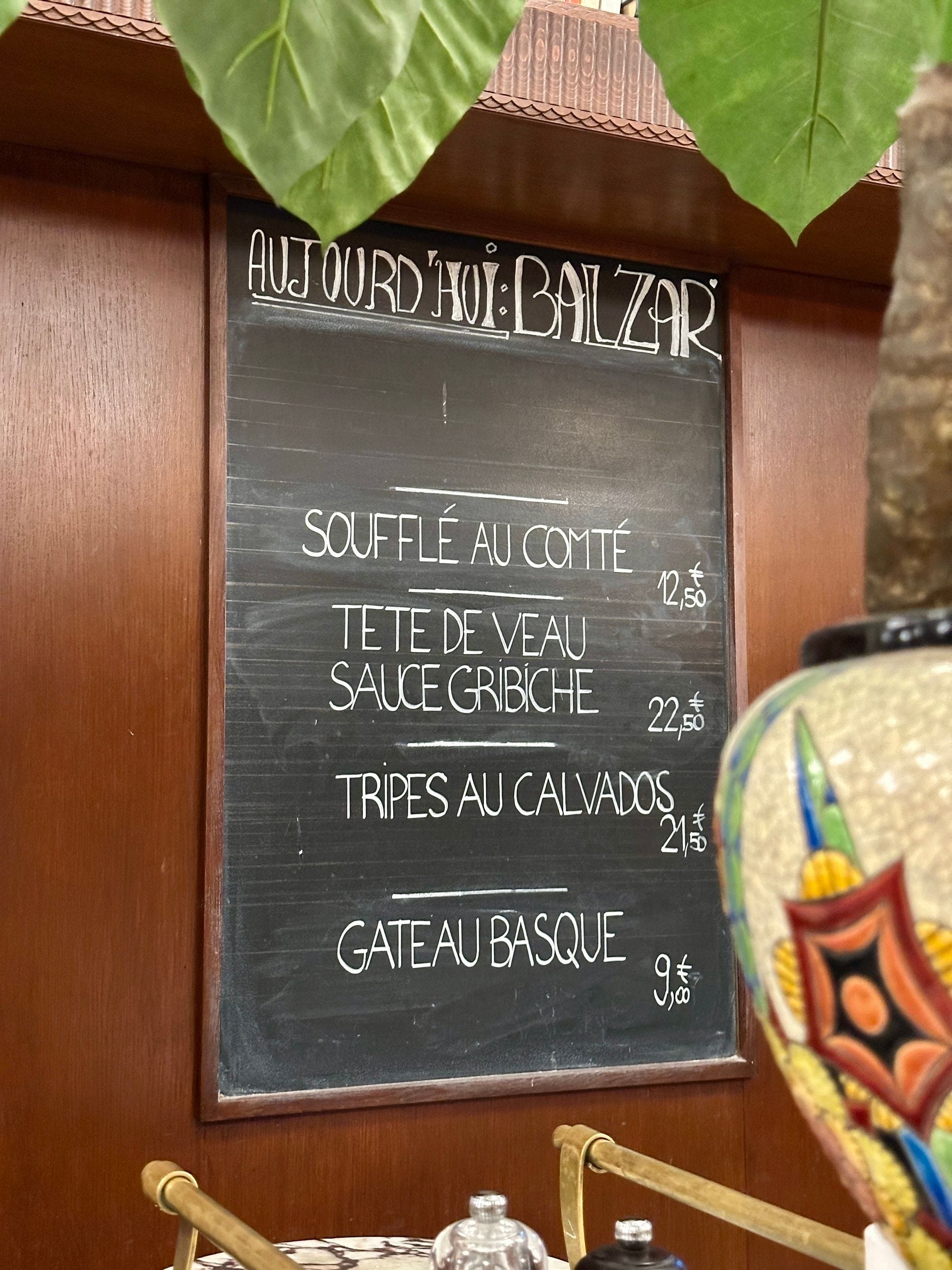
My stomach rumbled by the end of the movie at around 9:40 pm. Unfortunately, the chalkboard specials that initially drew my attention were sold out, so I went with les oeufs mimosas (deviled eggs) followed by the only remaining special, tripes au calvados (I don’t think I need to translate that one).
I held out very little in the way of expectations because, as you may have guessed from my description of the ambiance, one doesn’t really come to Balzar for the food. It’s a good thing because my eggs left a lot to be desired and required a significant wrist workout with the salt and pepper grinders. Then came my server around the corner with a large, hot cocotte. He placed it on his station, dumped its contents into a bowl, and served me my tripe.
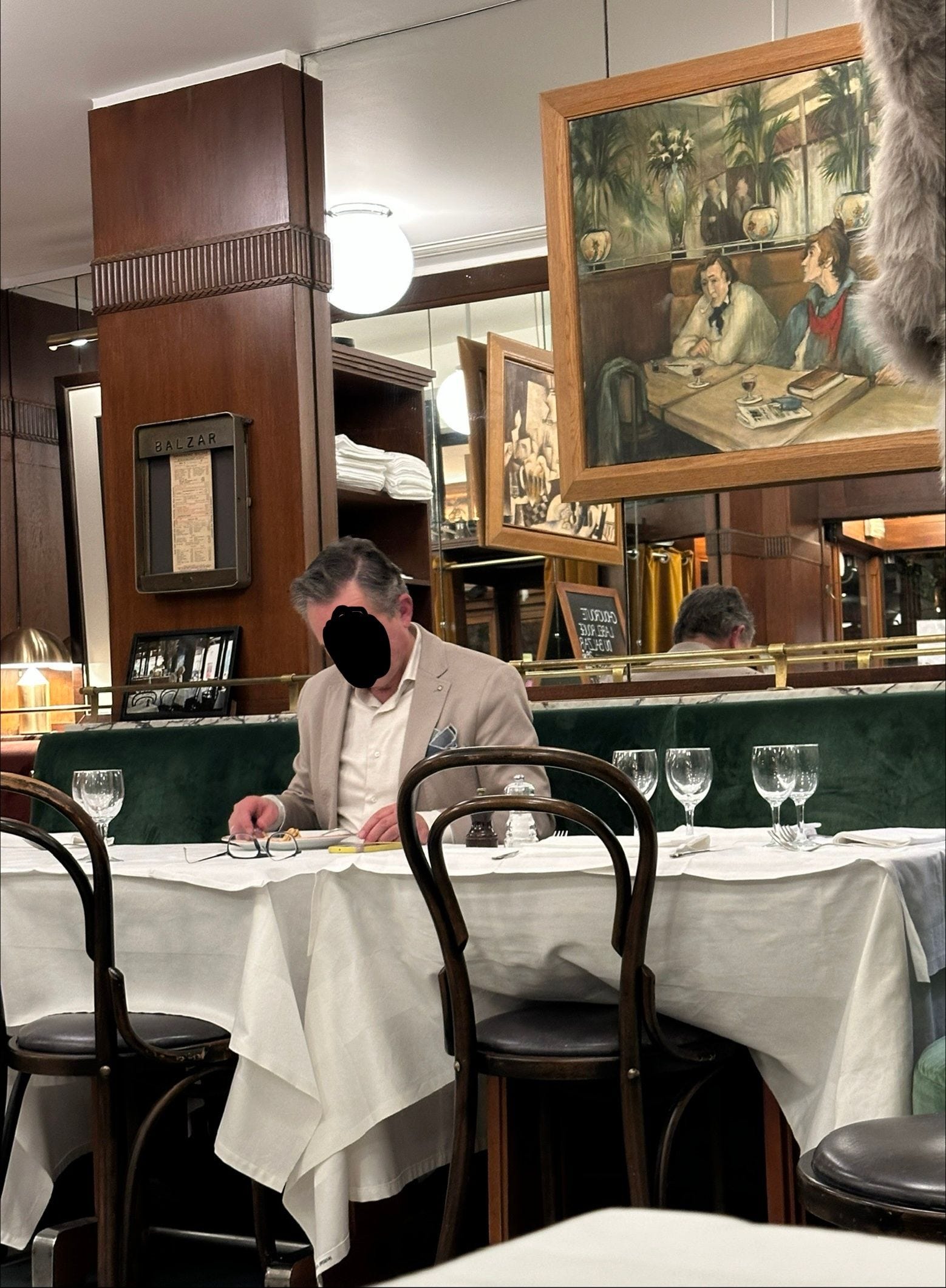
At this point in the evening, the remaining tables consisted mostly of well-dressed men enjoying a meal in solitude—the kind of character for whom Hitchcock may have cast Cary Grant. I was in good company.
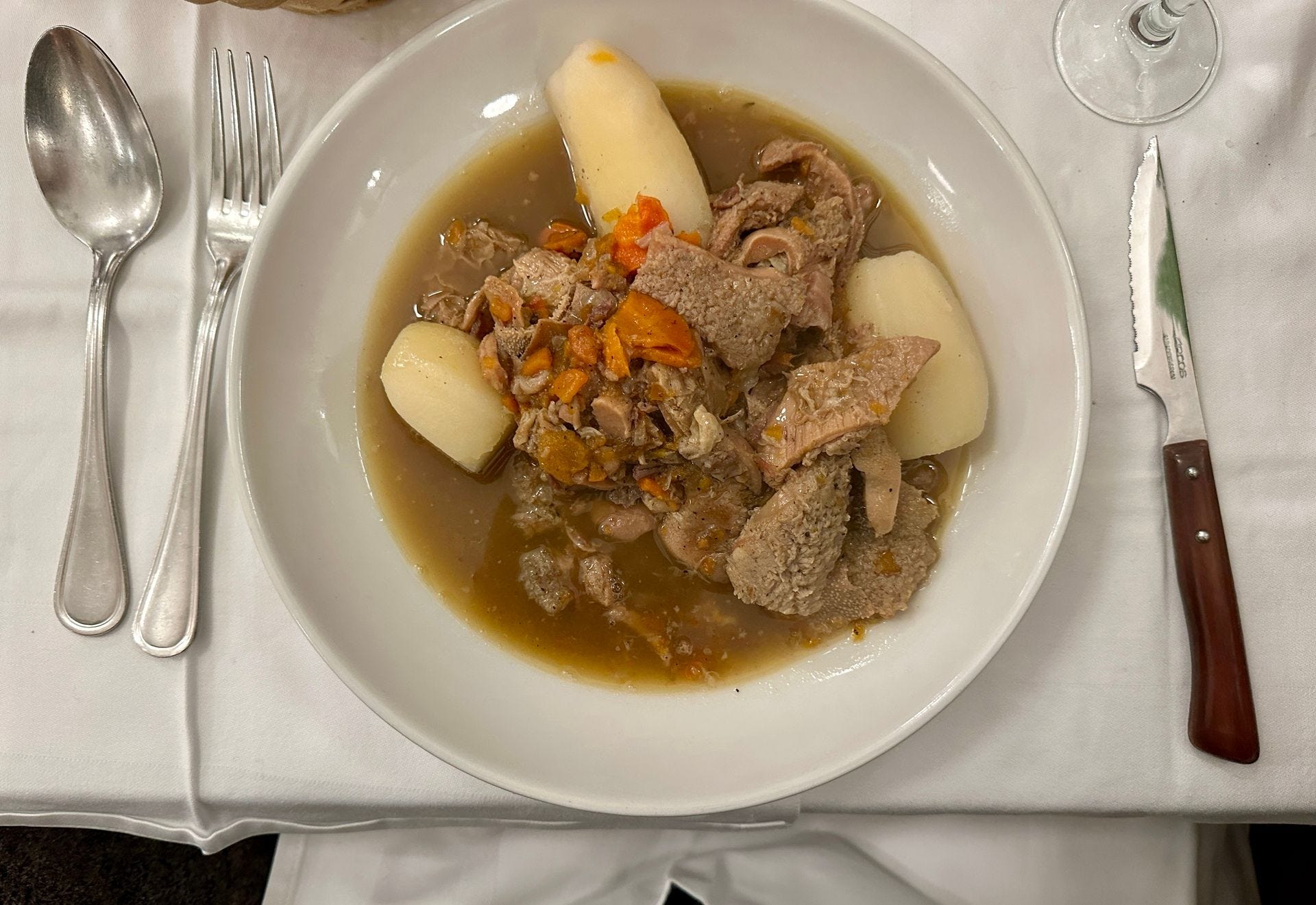
My tripe, coated in a rich, gelatinous broth, took me completely by surprise. Each bite was delightfully tender and packed with meaty flavor. And although I had initially resolved to forgo any alcohol, I ultimately required a robust grape juice to wash the tripe down. A glass of Bordeaux, Château de Brague, would do the trick. I remembered my grandfather, a bona fide bon vivant and a great fan of offal, as I wiped my plate clean with the mini boule in my bread basket.
It’s rare these days to see tripe on the menu of a brasserie, but as of 2018, Balzar has been under the ownership of Alain Grandière, a butcher and a true passionné with the mustache to prove it. Where others saw a fading star, Monsieur Grandière saw a living legend.
Sure, the cuisine isn’t always exceptional at Balzar, but that’s not the role we ask of it. On the other hand, the things Balzar does reliably offer—professional service, thick white linens, a dazzling interior—have become increasingly rare and deeply appreciated commodities. And while I’d have liked my silly Norma Desmond metaphor to hold up, I’ll happily admit that the sun has yet to set on Brasserie Balzar.
We have reached 1,000 subscribers! It shocks me that anyone reads this, but I am infinitely grateful that you do.
As always, reply to this email if you enjoyed this week’s edition, and click here to read past installments.
See you next week,
Max